Watt's Up
Smart electricity tracking for shared living
- Role
- UI UX Designer
- Domain
- Sustainable Design
- Duration
- 3 Months
- Tools
- Figma, FigJam, ESP32
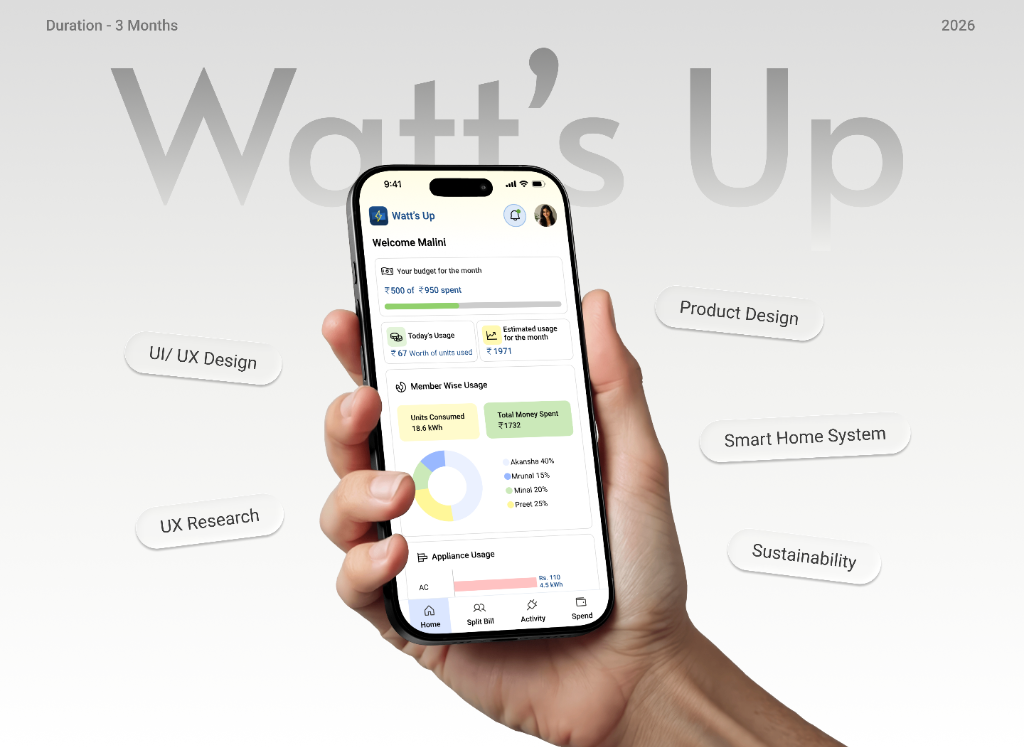
Watt's Up is a 10-week project that resolves roommate bill friction by pairing a snap-on biometric switch cap and an ESP32 smart plug with a shared mobile app to track individual electricity usage transparently. The challenge stems from the lack of visibility into heavy appliance costs in co-living spaces, which leads to unfair cost-splitting and reactive arguments. The solution preserves natural 'switch-on' behaviours by using fingerprint authentication to instantly assign real-time energy consumption (kWh) to specific users, utilising a cloud-backed notification engine to handle guest usage, and automatically splitting shared baseline costs equally to foster seamless household cooperation.
The Challenge & Problem
What problem did we set out to solve?
People living in shared apartments face constant friction over electricity bills because tracking individual consumption is complex and opaque. Individuals have no real-time visibility into who is using heavy-use appliances (ACs, heaters, washing machines), so cost-splitting feels inherently unfair, leading to reactive arguments, roommate tension and zero incentive for individual energy conservation.
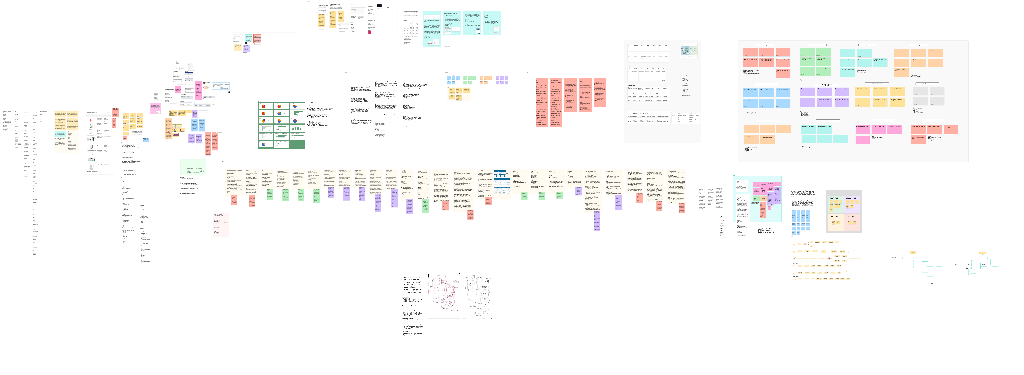
Comprehensive research canvas synthesizing survey responses, qualitative interview transcripts, behavioral segmentation, and appliance friction patterns in FigJam.
Initial Research & Synthesis in FigJam
Before designing the solution, I explored how people actually manage and perceive electricity consumption in shared living spaces.
Comprehensive research canvas synthesizing survey responses, qualitative interview transcripts, behavioral segmentation, and appliance friction patterns in FigJam.
- Segmentation: Grouped different household contexts to understand where bill friction is most consequential.
- Market Research: Mapped existing energy-monitoring systems to understand where they work and where complexity gets in the way.
- Survey: Explored electricity tracking, bill understanding, and shared billing behavior across households.
- User Interviews: Added real-life context behind survey patterns, routines, and household dynamics.
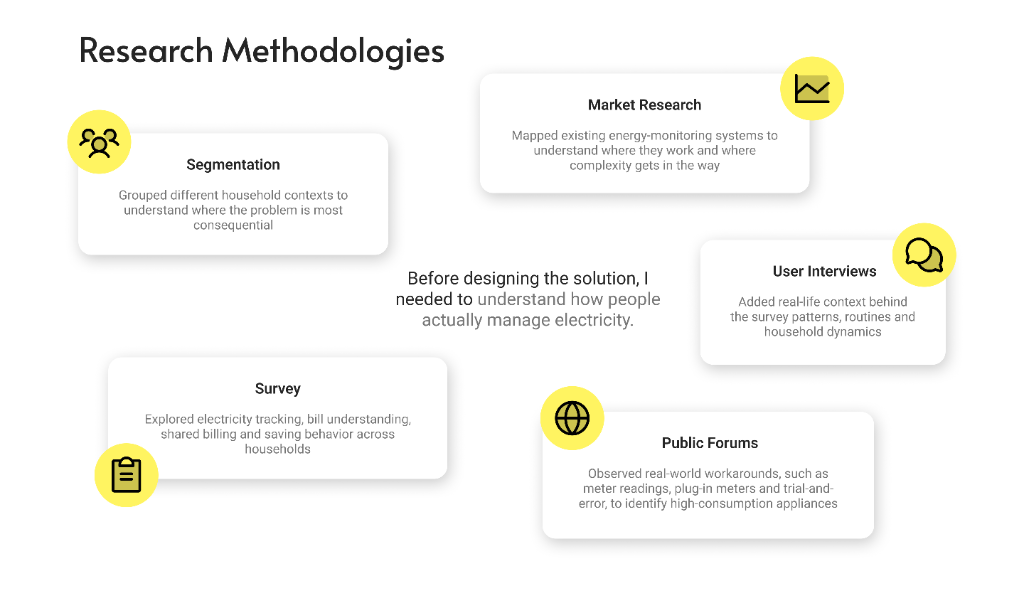
Research Methodologies & Synthesis
Key Insights
Synthesis of user interviews, surveys and market research revealed key behavioral gaps in shared energy tracking.
- Installation complexity and high costs prevent accurate circuit-level tracking.
- Automation and remote control exist, but rarely encourage users to change habits.
- Most systems provide data but not actionable insights for everyday decisions.
- Systems lack sustained engagement and motivation mechanisms.
- Most tools measure without explaining the reasons behind increased usage.
- Shared living is overlooked: existing products rarely address who consumed what on a shared bill.
- Opportunity: Create a simple system that makes electricity visible, personal, and accountable.
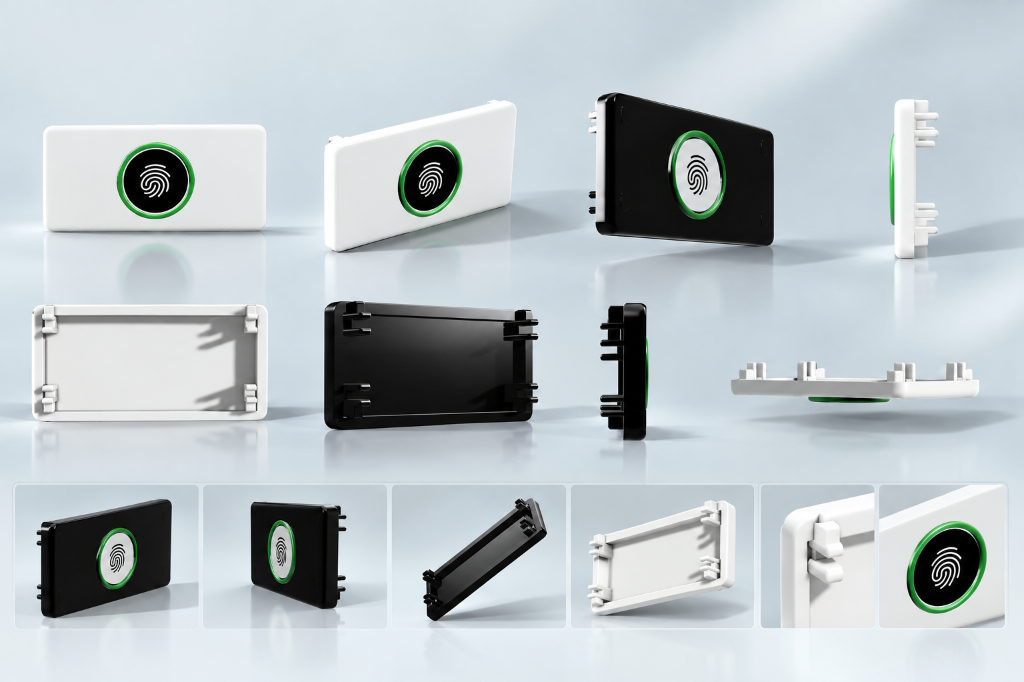
Different form studies helped explore how Watt’s Up could translate electricity monitoring into a simple, compact physical experience.
Exploring the physical form
Watt's Up resolves roommate bill friction by pairing hardware and software: fingerprint authentication assigns kWh to the right person the moment they flip a switch.
Different form studies helped explore how Watt’s Up could translate electricity monitoring into a simple, compact physical experience.
- Framed the problem as a transparency and trust challenge, not just a billing issue.
- Preserved natural switch-on behaviour: no app open required; biometric cap captures identity at the physical switch.
- Designed a cloud-backed notification engine to flag guest and unregistered usage in real time.
- Automatically isolated background "always-on" power (fridges, routers) to split equally, reserving individual charges for heavy-use appliances only.
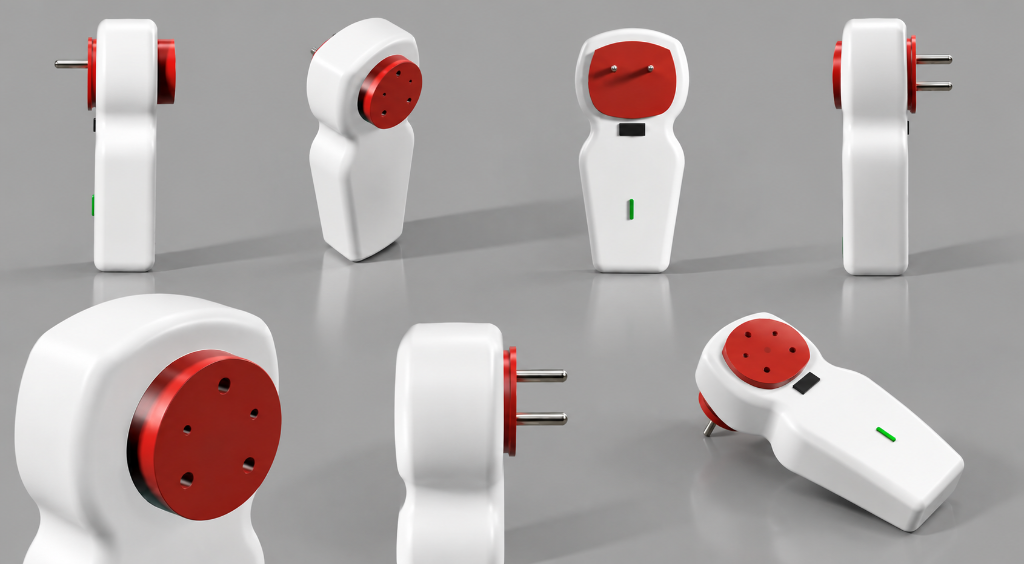
The physical concept was designed to fit naturally into everyday electrical setups while supporting the Watt’s Up monitoring experience.
Designing the connected hardware
The physical concept was designed to fit naturally into everyday electrical setups while supporting the Watt’s Up monitoring experience.
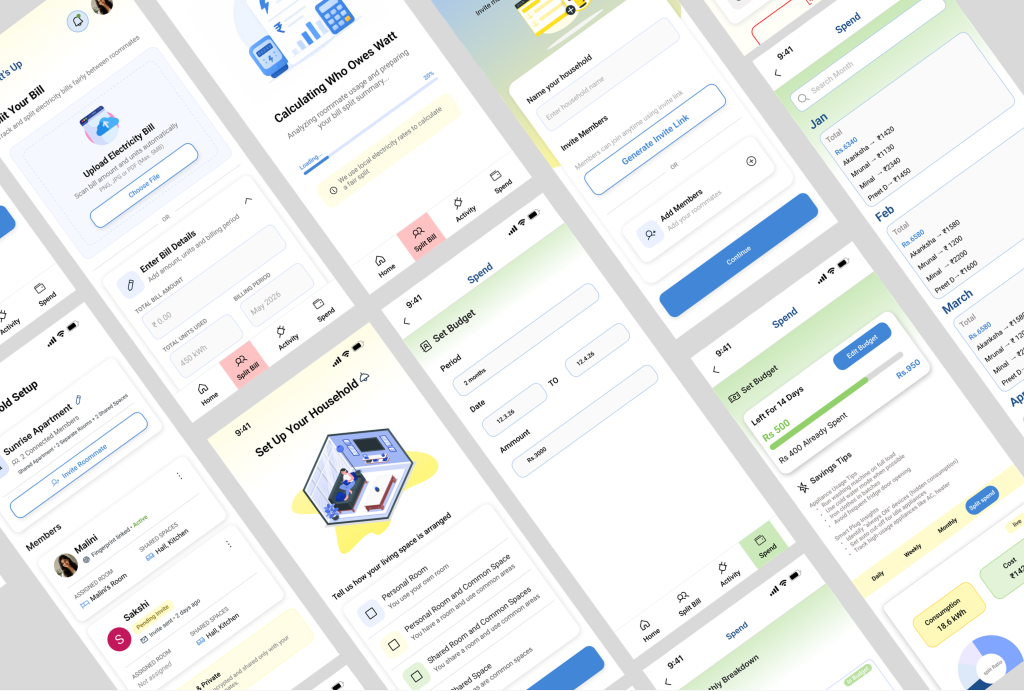
Solution
A connected system that makes invisible electricity use visible and fair.
- Biometric Switch Cap: a modular, battery-powered fingerprint module that snaps onto existing switchboards to identify the user instantly upon turning on an appliance.
- IoT Smart Plug: an ESP32-powered inline plug that tracks precise real-time energy metrics (W, V, kWh) and includes a PIR motion sensor to automatically turn off devices when a room is empty.
- Shared Mobile App: a centralized dashboard that maps energy data to the authenticated roommate, providing full visibility into active appliances and running costs.
- Automated Logic Engine: a backend system that automatically isolates background "always-on" power (like refrigerators) to split equally, while charging individual heavy-use consumption to the logged user.